
How Do 3g CO2 Cartridges Deliver Reliable Micro-Pressure Power Across Outdoor, Industrial, and Consumer Applications?
The 3g CO2 cartridge is a compact, single-use pressurized canister engineered to deliver a precise and consistent burst of carbon dioxide across multiple categories of equipment. Although small in size, it plays a critical role in micro-pressure systems such as inflators, pressurization tools, precision dispensers, calibration devices, and emergency-use mechanisms.
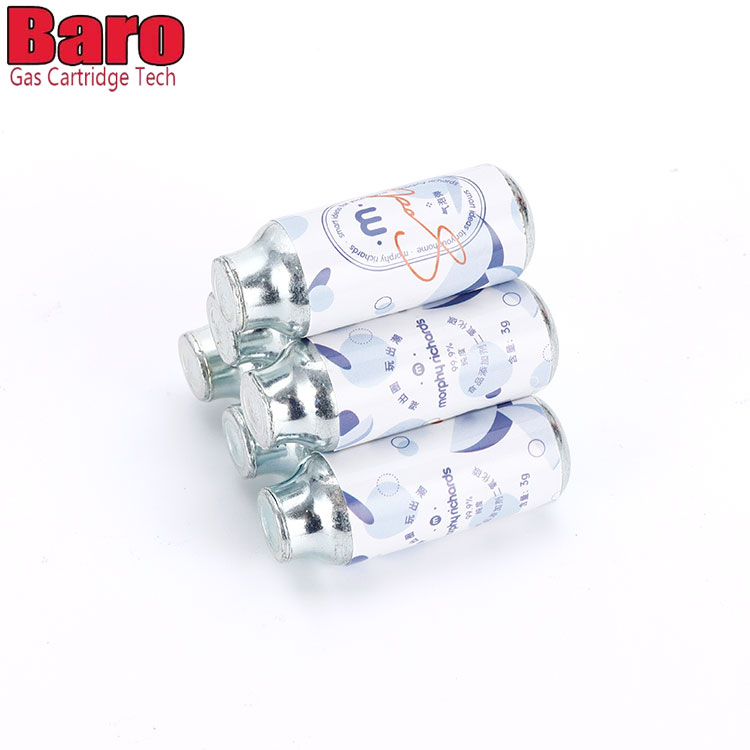
3g CO2 Cartridge Technical Specifications
| Parameter | Description |
|---|---|
| Net CO2 Content | 3 grams of high-purity compressed carbon dioxide |
| Cartridge Material | High-strength steel shell with corrosion-resistant finish |
| Thread Type | Commonly 3/8-24 UNF or non-threaded smooth-neck variant based on device compatibility |
| Burst Pressure | Typically above 800 psi at 21°C, engineered for controlled discharge |
| Operating Temperature | Designed for stable performance between -20°C and 50°C |
| Dimensions | Miniature format optimized for micro-devices and lightweight tools |
| Storage Life | Extended stability when stored in dry environments away from heat sources |
These parameters ensure the cartridge maintains pressure integrity, predictable gas release, and compatibility with a wide range of inflating, injecting, and pressurizing mechanisms.
How Does a 3g CO2 Cartridge Maintain Stable Pressure Delivery in Compact Systems?
The stability of a 3g CO2 cartridge’s pressure output is achieved through its structural integrity, internal gas density, and consistent manufacturing tolerances. Its steel casing is engineered to withstand substantial internal pressure while maintaining thermal resilience. Since CO2 exists partly in liquid form inside the cartridge, pressure remains stable as long as some liquid CO2 remains. This allows the cartridge to deliver uniform gas output even during rapid discharge, which is essential for micro-applications where small variations in pressure could disrupt system performance.
The small 3g capacity makes it particularly suitable for devices requiring minimal but precise amounts of CO2—such as small inflation units or compact testing devices where oversized cartridges would risk over-pressurization or unnecessary weight. The miniature form factor also facilitates integration into portable consumer items and specialized industrial tools.
Device manufacturers typically pair 3g cartridges with valve and puncture-based activation systems that regulate the exact moment of release. The cartridge’s neck design—threaded or non-threaded—determines how gas enters the host mechanism. Threaded variants ensure secure coupling, minimizing leakage. Smooth-neck versions allow fast and simple installation in devices designed to handle alignment and sealing internally.
Because CO2 undergoes rapid temperature change during discharge, stable material strength and internal coating quality are critical. Cartridges that fail to accommodate rapid cooling can experience frosting, reduced output, or seal deformation. High-quality 3g cartridges avoid these issues by using steel with uniform wall thickness and precisely calibrated sealing methods.
How Does a 3g CO2 Cartridge Compare With Larger Cartridges in Practical Use?
A 3g cartridge differs from larger capacities primarily in three operational dimensions: gas volume, application type, and device compatibility. Larger cartridges—such as 12g, 16g, or 25g—deliver extended inflation times or bigger bursts suitable for cycling, emergency flotation mechanisms, and paintball systems. In contrast, 3g cartridges serve specialized niches requiring controlled micro-injections of CO2.
Their smaller size also directly affects operational safety. Since the cartridge releases less gas, the risk of accidental over-pressurization decreases. This makes it suitable for precision tools where a confined environment or delicate components require strict pressure control.
Weight is another factor. A typical 3g cartridge weighs significantly less than common cycling or industrial cartridges, enabling integration into handheld, wearable, and ultra-portable products. This advantage is crucial in fields such as laboratory devices or field sampling instruments, where excess mass can reduce accuracy or mobility.
Additionally, smaller cartridges allow multi-cartridge systems to be built into a single device. For instance, a miniature inflator may carry several 3g cartridges instead of one large unit to permit staged pressure release, redundancy, or multi-function operation. Their modular capacity also supports devices that must meet strict shipping regulations or require incremental bursts rather than a single full discharge.
The operational convenience of 3g cartridges provides a distinct advantage in conditions requiring precise CO2 dosing. Their uniform dimensions and pressure stability make them favored components in compact platforms. While larger cartridges dominate broader industrial and outdoor markets, the 3g cartridge occupies a focused yet growing space where precision outweighs volume.
What Are the Emerging Trends Driving the Use of 3g CO2 Cartridges?
Demand for small-capacity CO2 cartridges is influenced by trends in miniaturization, portable device engineering, and precise pressure-based mechanisms. As industries increasingly require tools that are lighter, more compact, and more efficient, micro-cartridges enable manufacturers to design high-performance products without compromising portability.
The shift toward compact emergency-response technologies also supports broader adoption. For example, micro-inflation systems are being integrated into rescue tools, compact flotation aids, and survival gear. These devices require reliable CO2 bursts while maintaining minimal weight and size. A 3g cartridge provides the controlled gas volume needed to deploy micro-components swiftly without requiring larger, heavier cartridges.
Another trend is growth in precision dosing and calibration systems. Laboratory and field instruments often require consistent gas expansion in tightly controlled increments. A 3g cartridge, with its predictable pressure curve, is well suited for these scenarios. The development of portable diagnostic and environmental testing devices continues to accelerate, leading to increased demand for micro-cartridge CO2 sources.
From a manufacturing perspective, environmental and quality standards are rising. This includes more stringent requirements for material strength, recycling compatibility, and leak-proof sealing. Modern 3g cartridges now emphasize uniform wall thickness, improved surface treatments, and refined fill-pressure control. These enhancements reduce variability and support reliable performance in demanding environments.
The global shift toward modular and replaceable component design also plays a role. Devices with swappable micro-cartridges can extend operational lifespan, reduce maintenance complexity, and provide greater flexibility for field use. This approach is becoming common in portable inflators, micro-dispensers, and compact pressure-triggered mechanisms.
Collectively, these trends indicate that the market for small CO2 cartridges—especially the 3g format—is expanding beyond traditional segments and becoming integral to a wider array of precision-oriented applications.
Comprehensive FAQs on 3g CO2 Cartridges
What types of devices are typically compatible with a 3g CO2 cartridge?
Devices that rely on controlled micro-discharges of CO2—such as mini inflators, micro-dispensers, calibration systems, and certain emergency deployment tools—often utilize 3g cartridges. These devices are engineered to handle the pressure and volume characteristics of small-capacity CO2 sources, and they incorporate puncture mechanisms or threaded interfaces to secure proper gas release.
How long can a 3g CO2 cartridge be stored without losing pressure?
A high-quality cartridge can generally maintain internal pressure for many years if stored correctly. Proper storage conditions include keeping the cartridge in a cool, dry environment away from direct heat and corrosive elements. The steel shell and specialized sealing methods protect the internal CO2 from leakage, ensuring consistent performance when activated.
The 3g CO2 cartridge plays a pivotal role in systems requiring stable, precise, and compact sources of pressurized carbon dioxide. Its engineering supports a diverse range of applications across consumer, industrial, scientific, and emergency-response sectors. As technology continues to move toward lighter, portable, and highly controlled mechanisms, the relevance of micro-capacity cartridges is growing steadily. Manufacturers and users benefit from the reliability, modularity, and performance consistency offered by well-designed 3g cartridges.
For organizations seeking dependable supply, refined specifications, and consistent quality, Baro provides professional solutions tailored to modern pressure-based systems. For further information, clarification, or procurement details, contact us to discuss the most suitable options for specific applications.
Send Inquiry



X
We use cookies to offer you a better browsing experience, analyze site traffic and personalize content. By using this site, you agree to our use of cookies.
Privacy Policy